Finding your mover shouldn’t feel like moving
moveBuddha helps people compare moving companies and request quotes during a stressful, high-cost decision. I led the UX/UI redesign of mover detail pages and the quote flow across desktop and mobile, focusing on three competing needs: establish trust, provide useful pricing context and make the next action clear.
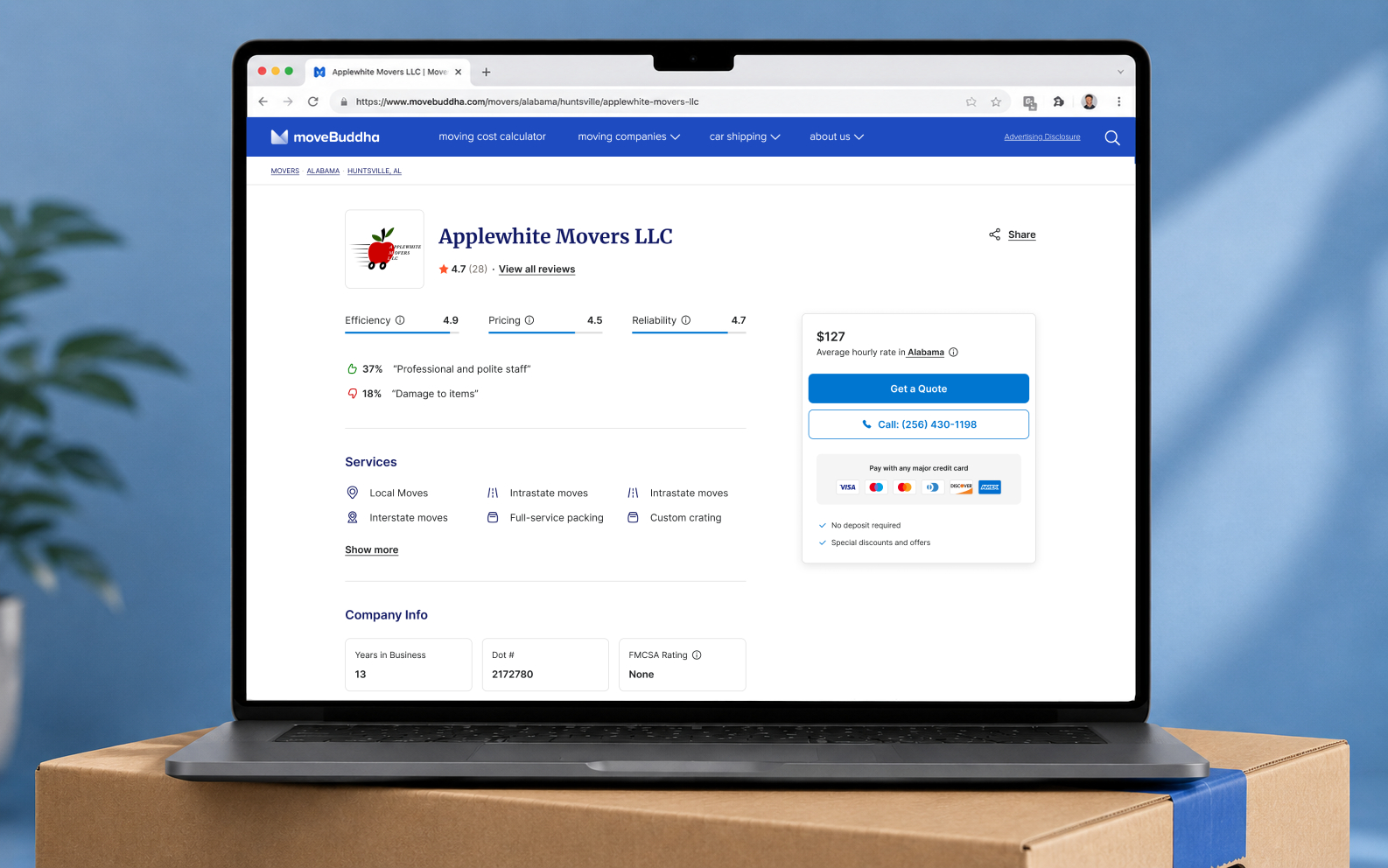
The page had to answer users’ practical questions before asking them to act. My challenge was to organize trust signals, pricing context and contact options without crowding the page or pushing the primary action out of reach.
The problem to solve
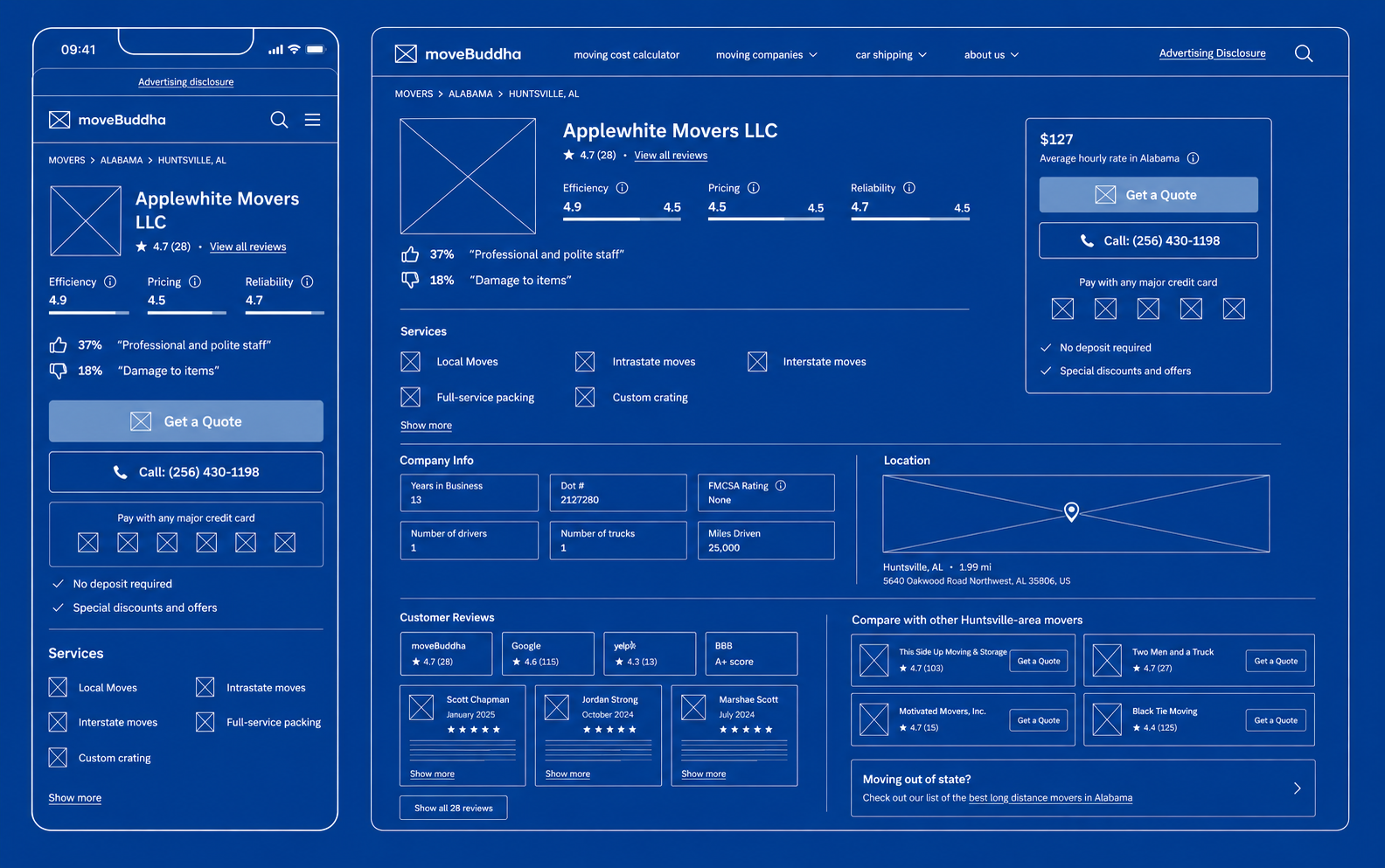
The mover detail page brings together reviews, company credentials, pricing context, quote requests and phone contact. Those elements all matter, but giving them equal emphasis made it harder to decide what to do next. I reorganized the page around the questions users needed answered before requesting a quote, then gave the quote action a consistent priority across screen sizes.
What got in the way
I used heatmaps, session recordings and funnel data to identify three recurring points of friction.
Trust signals buried below the fold
Ratings, review excerpts and company credentials appeared too far down the page, leaving users to make a high-cost decision without seeing reassurance early enough.
Mobile CTA competition
On small screens, quote and phone actions competed for attention. The primary action could also fall below the first scroll, adding effort at the moment users were ready to act.
No pricing context near the CTA
The quote action lacked nearby pricing context, so users had to act without a useful reference point for expected cost.
The decisions
Trust above the fold
I moved ratings, review excerpts and key credentials higher in the page hierarchy. On desktop, the sticky sidebar kept the decision context and contact actions available while users explored the details.
Sticky CTA hierarchy on mobile
I introduced a persistent mobile action bar with a clear order: request a quote first, phone contact second. Both options remained accessible without competing equally for visual attention.
Pricing context next to the ask
I placed the state’s average hourly rate beside the quote action. It was a reference point, not a promised quote, helping users understand the next step without implying a guaranteed price.
Mover detail page
The redesigned layout brings ratings, review excerpts and service information into the first view on desktop and mobile. On desktop, the sticky sidebar keeps contact actions visible; pricing context sits next to the primary quote action so users can evaluate the next step with more information.
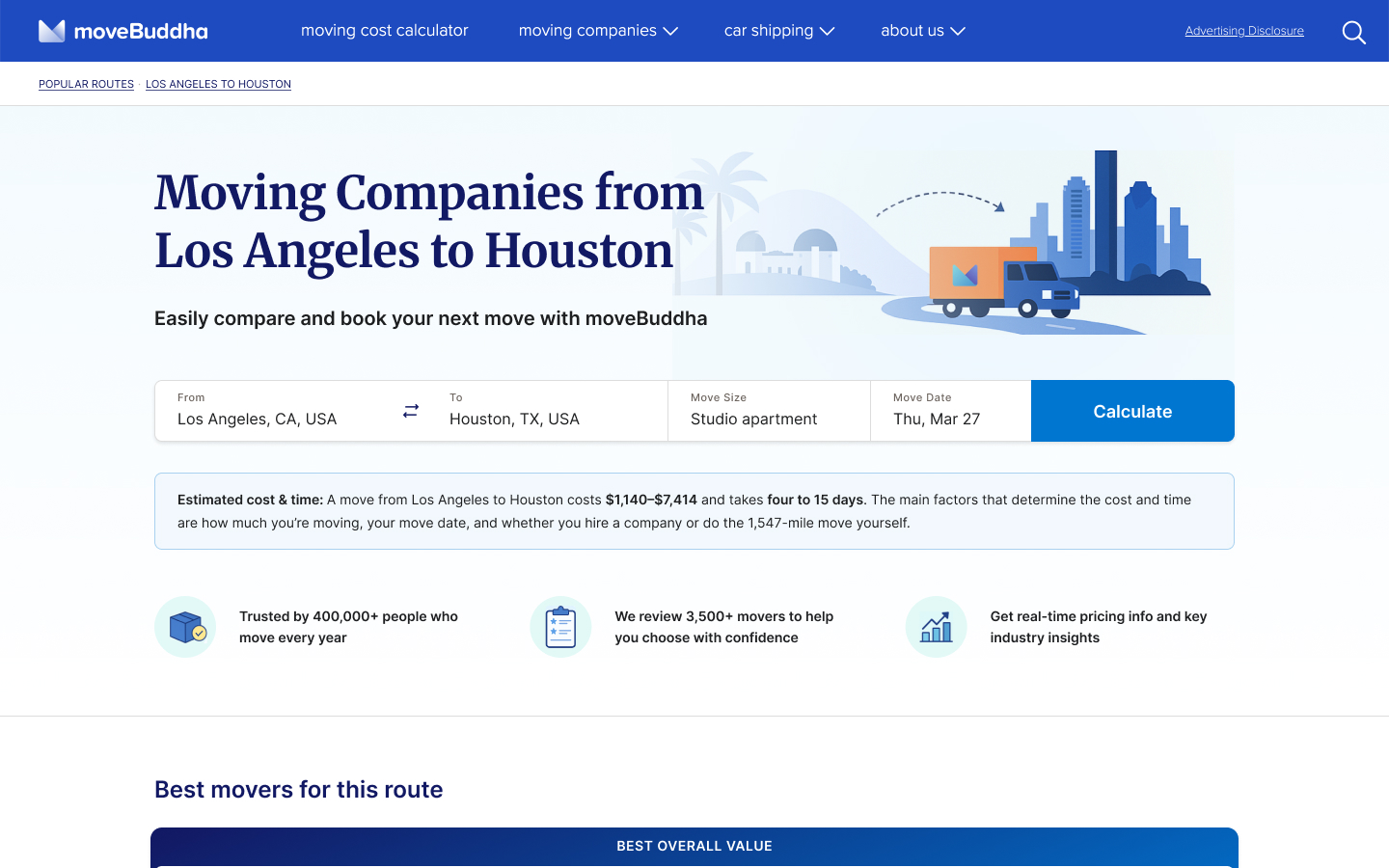
Mobile quote flow
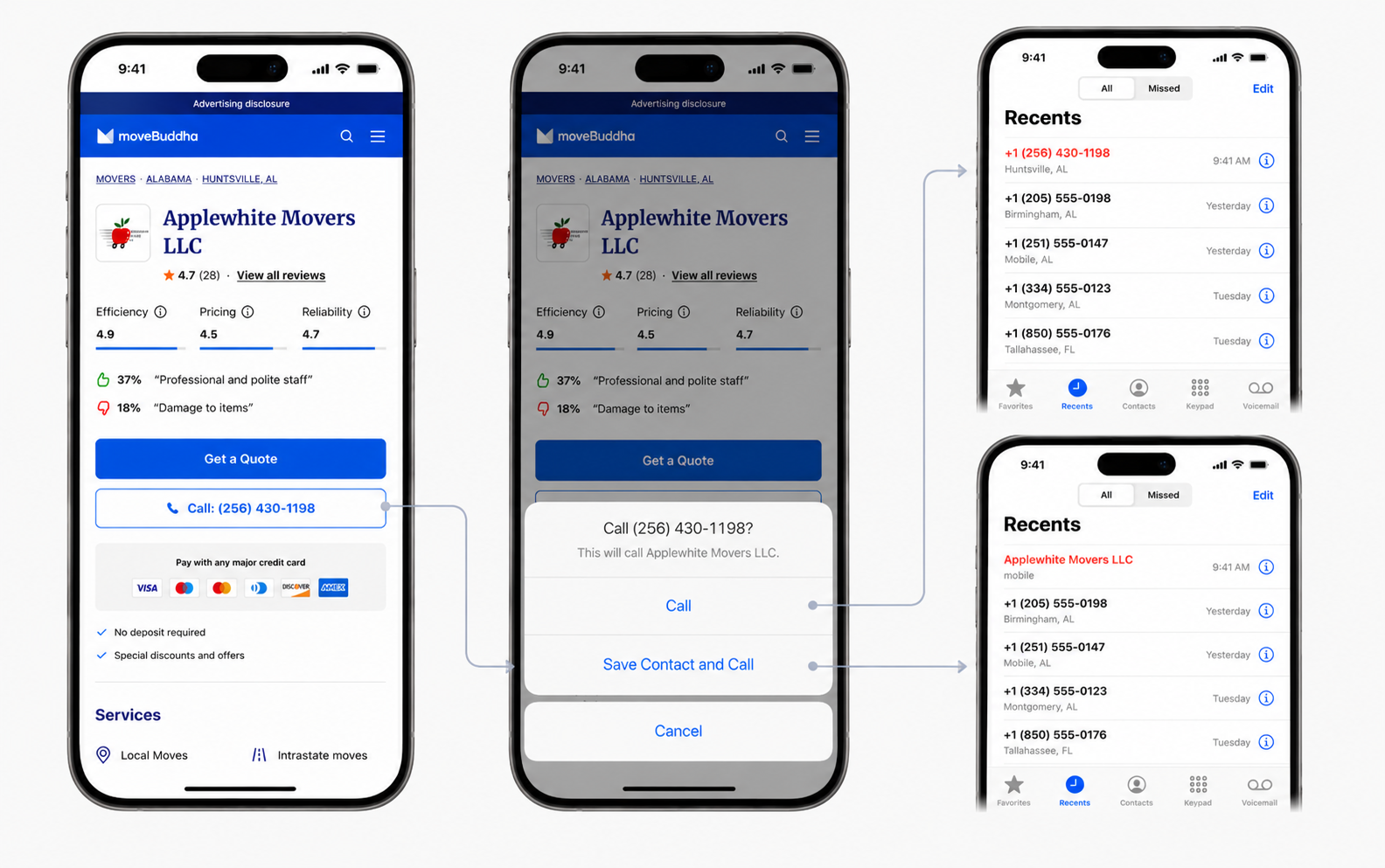
On mobile, the persistent bottom bar keeps the primary action reachable. Phone contact opens a native action sheet with two explicit choices: call now or save the contact. This makes the secondary path intentional instead of forcing users into a single behavior.
What changed
The redesigned pages rolled out across the mover directory. The reported post-launch metrics below track quote requests, click-to-call conversion and time on page against the previous experience. They show how the work performed, while the design decisions above explain what changed in the experience.
Metrics reflect post-launch performance tracked over a 90-day window. Quote rate and call conversion measured against the previous page variant.
Thank you for viewing!