Meals people come back to
CookUnity is a chef-to-consumer platform that delivers restaurant-quality meals on a weekly subscription. I joined as the founding product designer when the product was still early, and helped shape every layer of the experience: onboarding, weekly menu, dietary preferences, delivery management and the design system that made all of it consistent at scale.
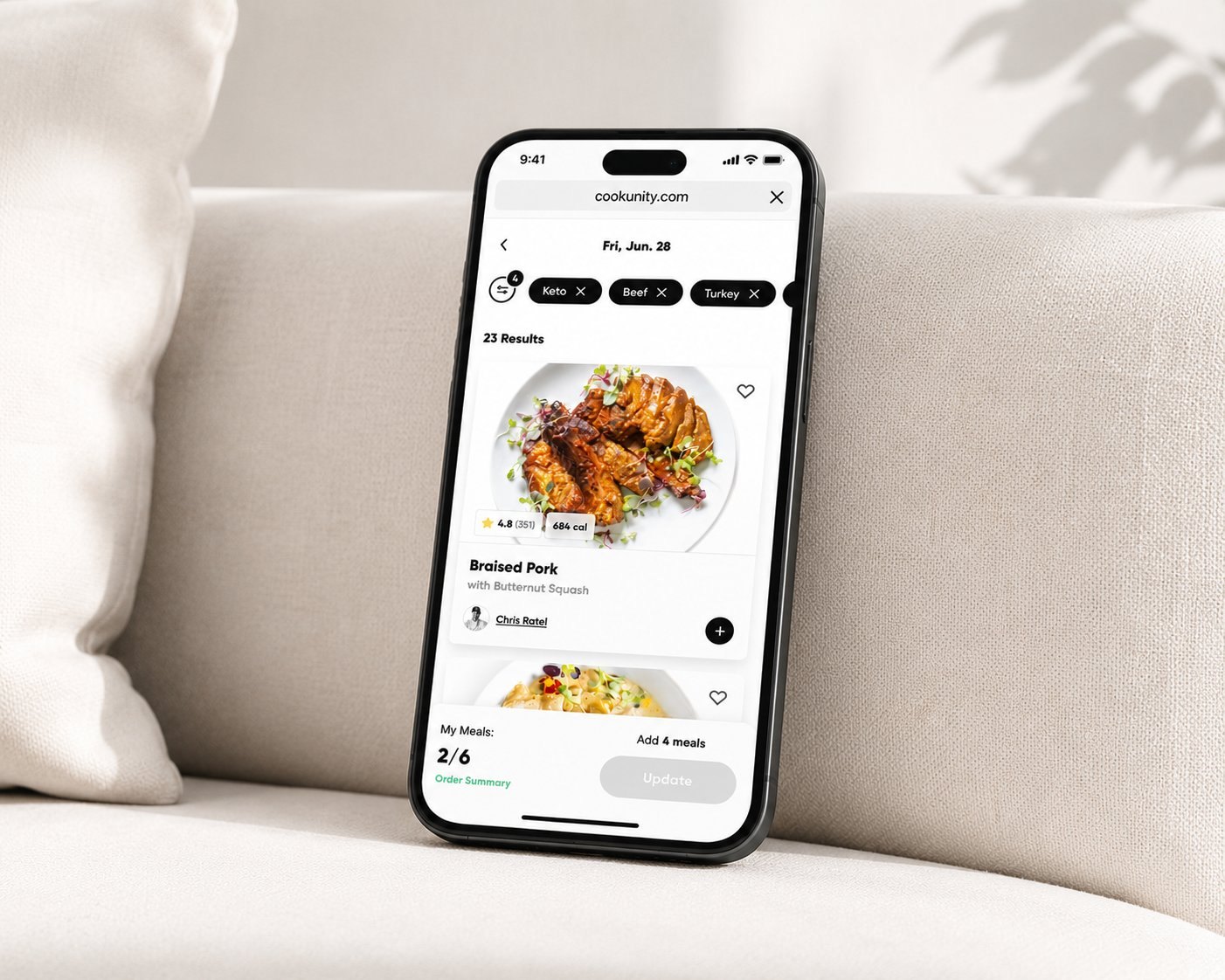
CookUnity® connects people with meals made by real chefs. My job was making a recurring, high-frequency decision feel effortless, week after week, for hundreds of thousands of members.
Project goal
A subscription does not win on the first order. It wins on the fifth. When I joined, the product had real traction but real friction too: an onboarding that asked for commitment before showing the product, a menu with hundreds of meals and no smart way through it, and account controls that made pausing harder than canceling. The goal was to fix every one of those leaks and build the design foundation that would let the team keep fixing them as the catalog and member base grew.
Problems
Interviews with new members and cancellation data pointed to three failure modes costing the business at every stage of the funnel.
Too many steps to value
New members had to commit to a plan, enter payment and confirm an address before they could see what they were actually buying. Most dropped before the first meal.
Menu paralysis
A catalog of 100+ chef-made meals refreshed weekly is a product strength, but without smart filtering it read as a wall. Members spent more energy deciding than enjoying.
No control, so people left
Skipping a week, pausing or changing a delivery required contacting support. Members who hit a busy stretch cancelled instead of pausing, and rarely came back.
Solutions
Value before commitment
Redesigned onboarding so members browse real chef meals and set their preferences first. Plan selection and payment come last, once the product has made its case.
A menu that knows you
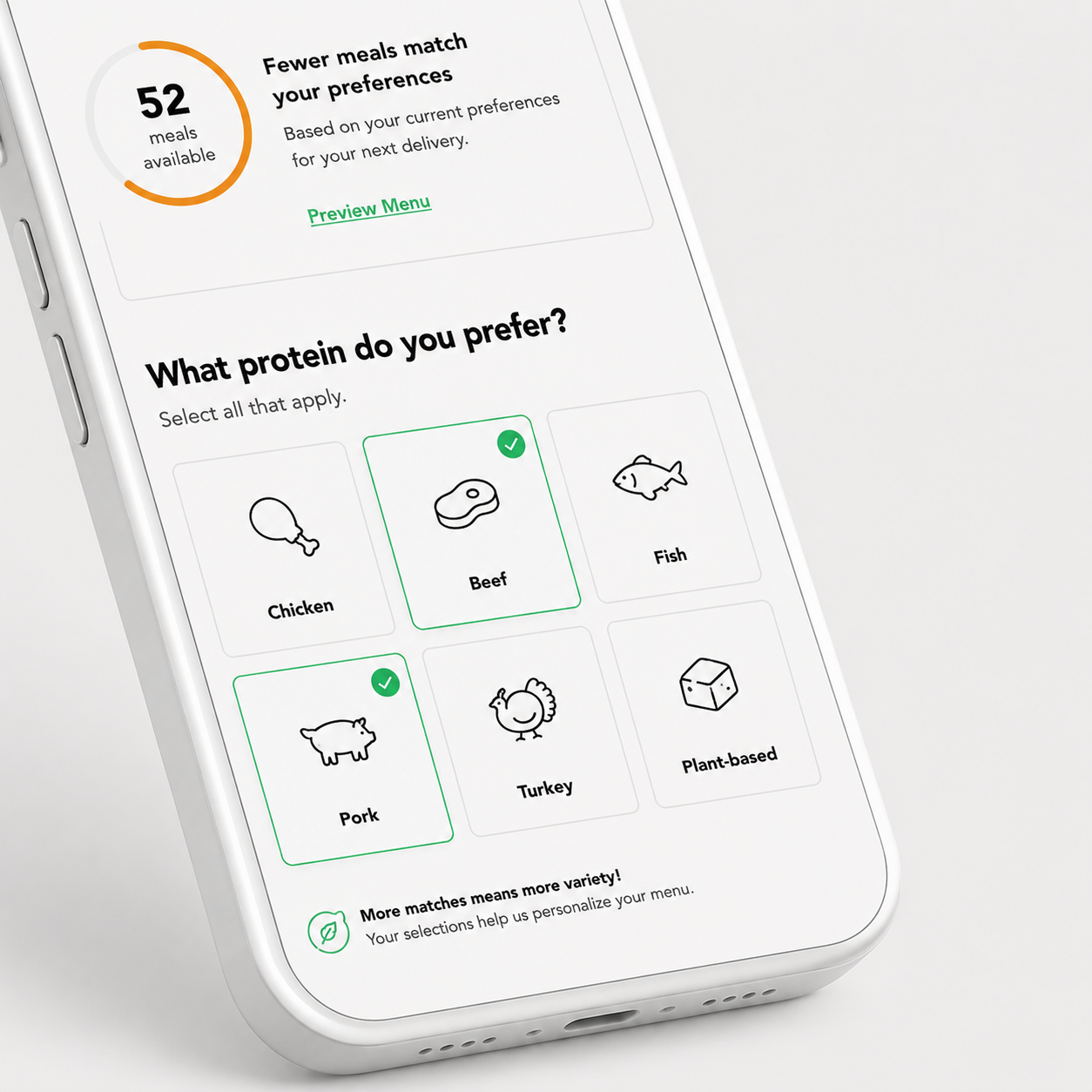
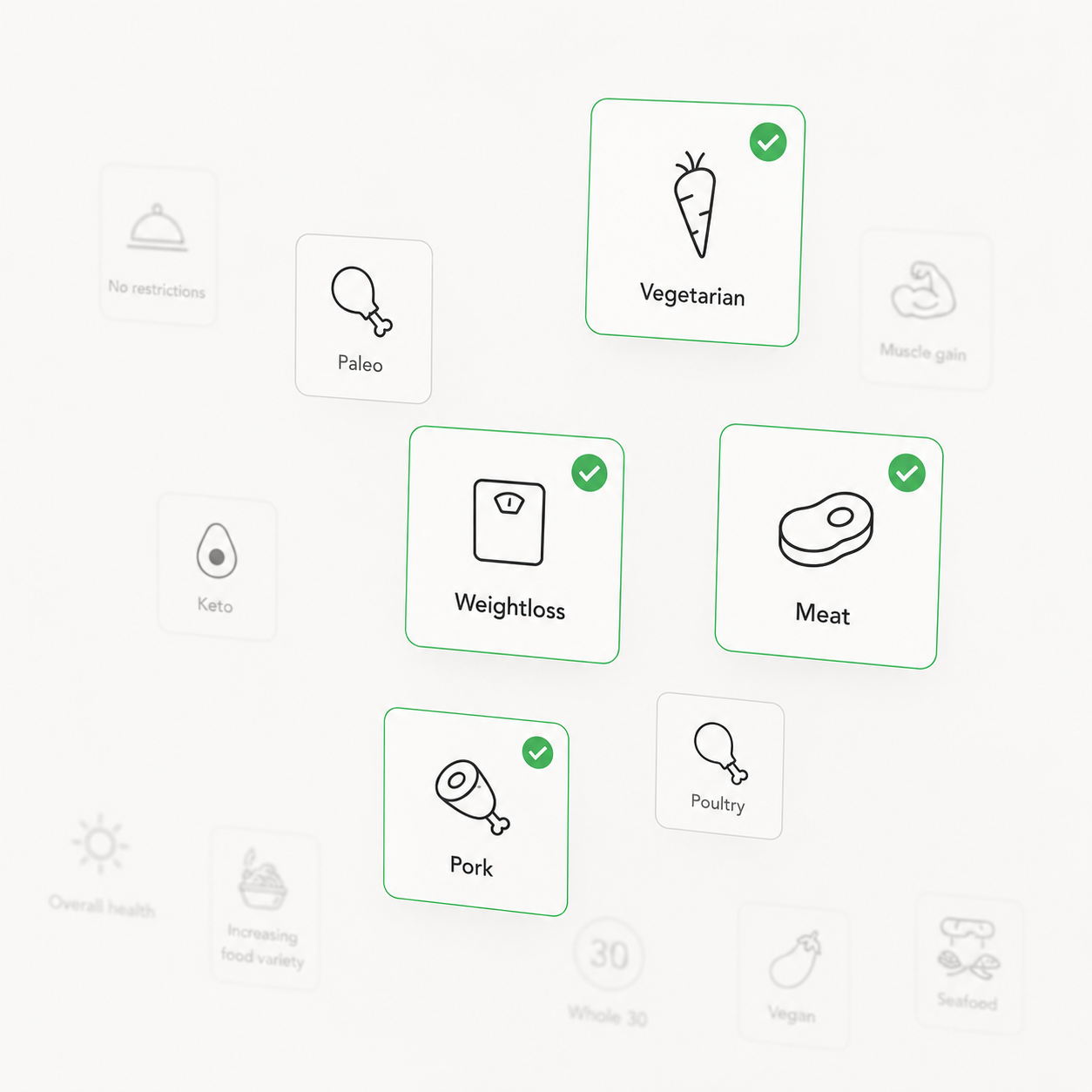
Built a preference system that filters by protein, diet and past orders, surfacing a curated set of relevant meals with live counts as selections change. Less scrolling, faster decisions.
Full self-serve control
Brought skip, pause, reschedule and meal swaps into the app with clear deadlines and billing always visible. Giving members control kept them in the subscription instead of out of it.
Meal Cards
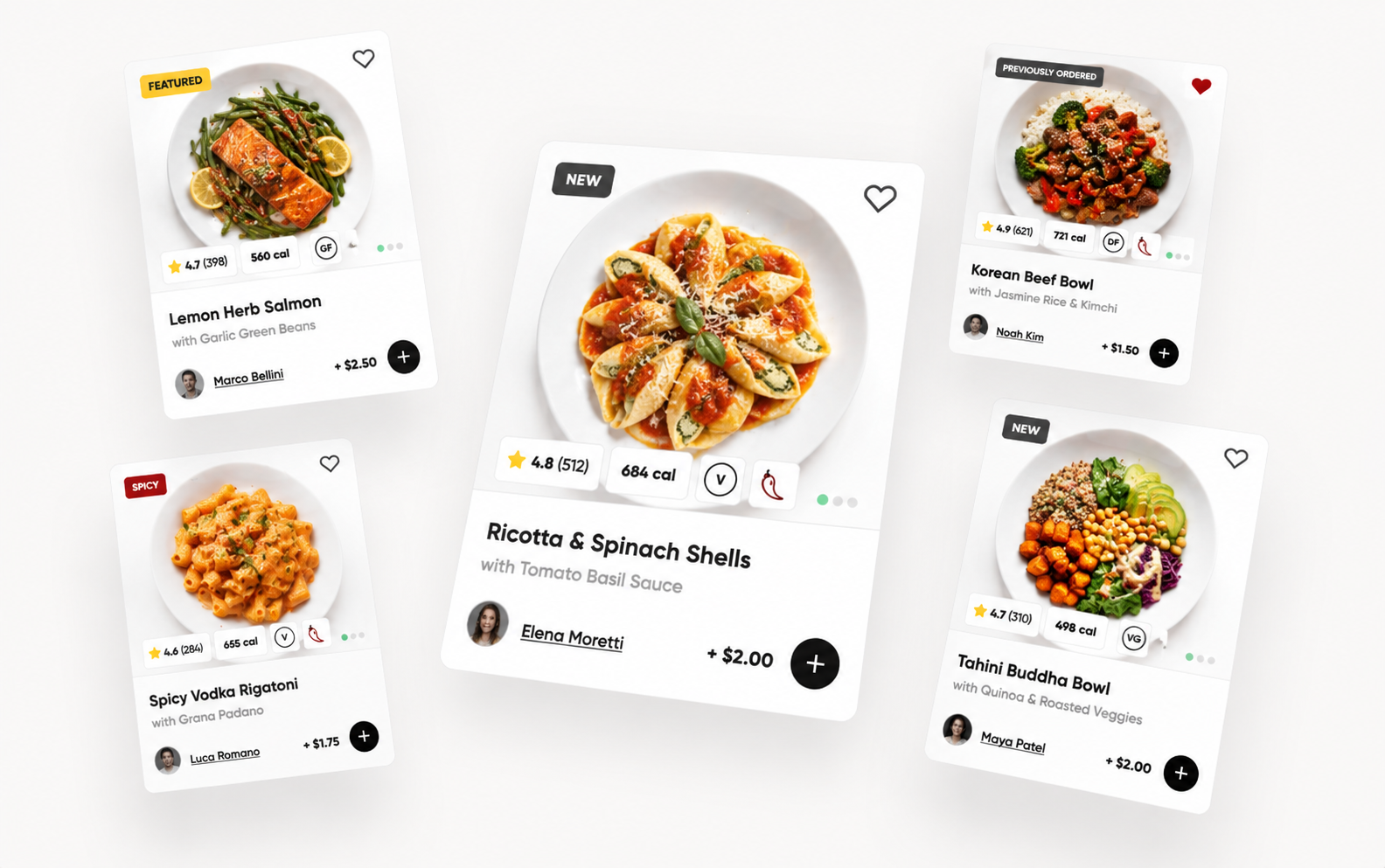
The meal card is the atomic unit of the weekly decision. Each one leads with a full-bleed food photo and surfaces the signals members actually use to choose: rating, calories, dietary badges, chef name and price difference from the base plan. Labels like Featured, New and Previously Ordered reduce scanning time and reward familiarity without being intrusive.
Set your preferences
Preferences are the engine behind relevance. Members set their protein types and dietary goals once, and the system uses those signals to rank and filter every weekly menu automatically. A live meal count updates as selections change, making it immediately clear how each choice affects availability. The result is a catalog that feels curated rather than overwhelming.
Design system
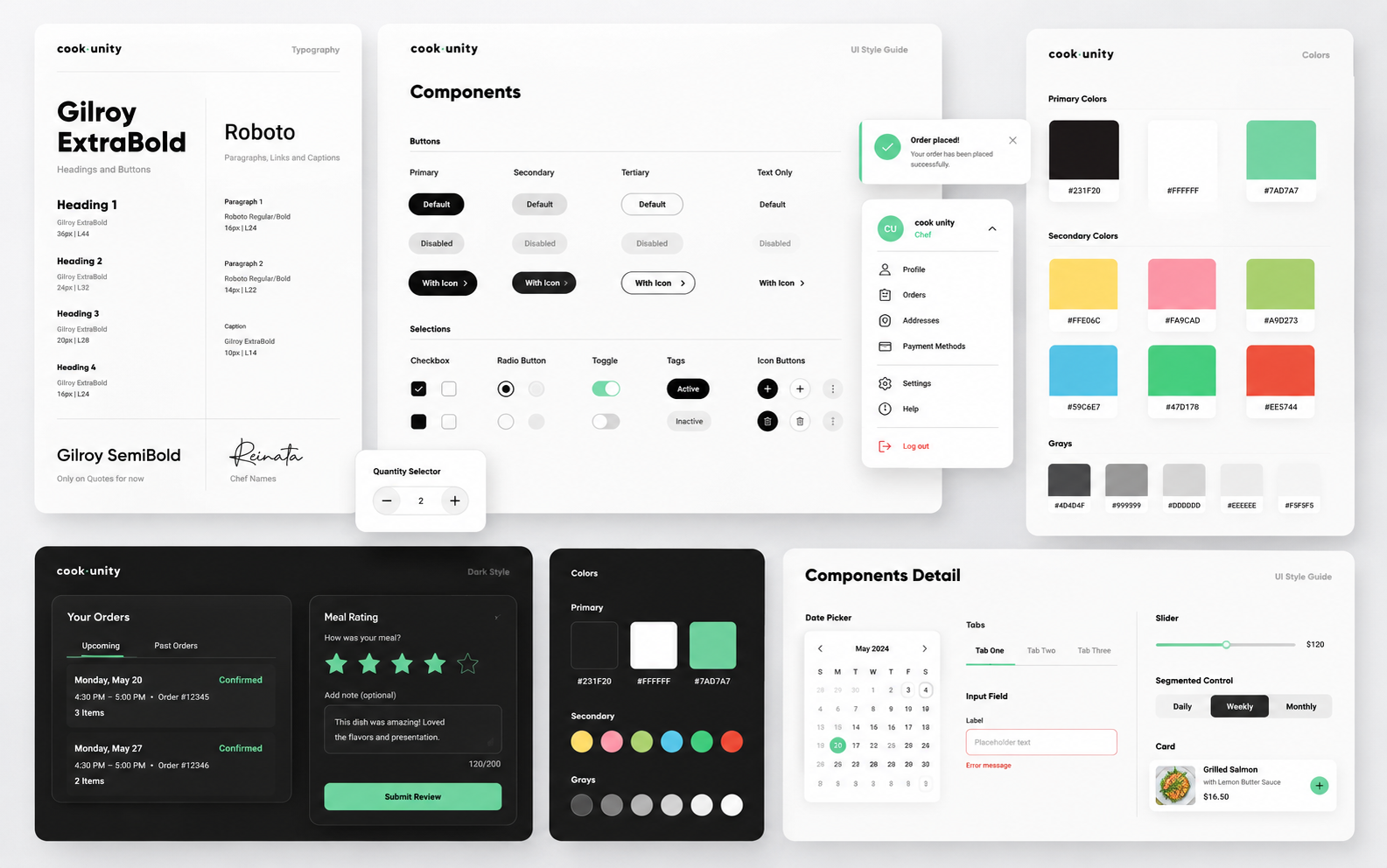
As the team grew, consistency became a product problem. I built and maintained the CookUnity design system: a typography scale using Gilroy and Roboto, a full component library covering buttons, selections, cards, inputs and navigation, a dual-mode color palette for light and dark contexts, and documentation that let engineers ship without a designer in the room for every decision.
Impact
The work spanned two years and every layer of the product. During that period CookUnity scaled from thousands to hundreds of thousands of active members, closed a unicorn-valuation funding round and expanded into new markets. I grew from sole designer to leading a team, and the systems built in this period are still in production today.
Onboarding and retention figures reflect changes measured against pre-redesign baselines. Member count reflects platform scale during the engagement period.
Thank you for viewing!